

Speaking Up at a Residents' Meeting: How to Present a Position Even Opponents Will Listen To
How to prepare for a residents' meeting: one key sentence‚ an opening everyone shares‚ a calm voice‚ checkable facts and a clear request.
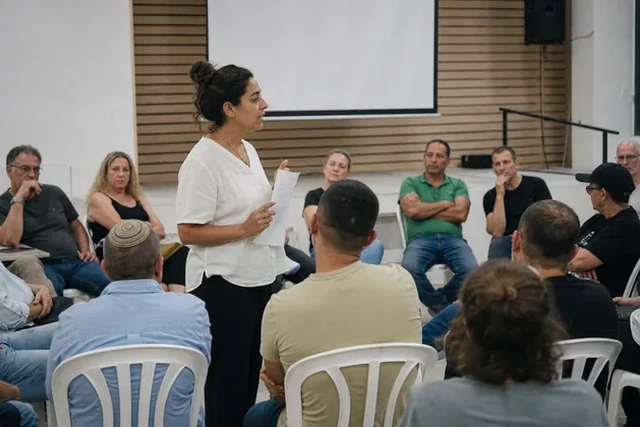
The ability to speak in public and be heard is not a talent you are born with. It is made up of several skills that can be learned‚ from building a clear argument to controlling your voice‚ breathing and body. Anyone who has learned rhetoric tools and how to stand in front of an audience knows that content is only half of the message‚ and the other half is the way it is delivered. At a residents' meeting‚ where time is short and the mood is tense‚ this difference is especially striking. Here are some principles that will help you the next time you stand up to speak in front of neighbors‚ elected officials and municipal professionals.
Decide in Advance on One Sentence That Will Stick
Before the meeting‚ write down one sentence you want everyone in the room to remember. Not three arguments and not a list of ten problems‚ but one clear sentence‚ such as "the new road will pass a meter and a half from the windows of a kindergarten". Everything else is built around that sentence: a short opening introducing who you are‚ two or three facts that support the claim‚ and a practical proposal for a solution. People who come to the meeting with one central sentence speak in a more focused way‚ and elected officials can quote it later in the discussion. People who come with a long list usually discover that their time ran out before they reached the most important point.
Open with What the Whole Audience Shares
The people at the meeting have different interests‚ and sometimes some of them support exactly the plan you oppose. If you open with an attack‚ they will stop listening at the very first sentence. A good opening starts with what everyone in the room agrees on‚ for example the wish for the neighborhood to develop‚ for children to be safe or for the city to attract tourists. From there you move to the point where you believe the current plan fails to achieve that shared goal. This technique does not weaken your position. On the contrary‚ it gives it a chance to be heard by those who did not agree with you to begin with‚ and they are exactly the people you need to persuade.
Voice‚ Pace and Breathing
When we are under pressure‚ our breathing becomes shallow and our voice rises and speeds up. The audience hears that pressure and reads it as insecurity or anger. Before you stand up‚ take two deep breaths from the belly and release them slowly. When you start speaking‚ aim your voice at the last row of the hall‚ even if there is a microphone‚ and slow down a little more than feels natural. A short pause after an important sentence gives the audience time to absorb it and projects far more confidence than any extra word. If someone interrupts‚ do not raise your voice to overpower them. Stop‚ wait for silence and continue from the same place.
Facts That Can Be Checked
A claim like "everyone in the neighborhood is against it" is easy to refute‚ because there will always be someone who supports the plan. A claim like "we collected two hundred signatures out of three hundred households on the street" is much stronger. It is worth coming with precise numbers‚ photos or a printed map and presenting them simply. Elected officials and planners respond to data that can be checked‚ not to general feelings. If you are not sure about a figure‚ it is better not to mention it than to be caught in a mistake that will damage the credibility of everything you say.
End with a Clear Request
Many speakers end with a sentence like "we ask you to think about it". That is an ending that commits nobody to anything. A good ending includes a defined request: postponing the vote until an alternative is presented‚ holding a site visit with residents' representatives or publishing the traffic consultant's opinion. A request like that gives elected officials something to answer and allows you to check later whether it was fulfilled.
Summing It Up
Speaking at a residents' meeting is a real opportunity to influence what happens on your street. Prepare one central sentence‚ open with what everyone shares‚ control your voice and breathing‚ bring facts that can be checked and end with a clear request. Even if you do not convince everyone‚ the audience will remember what you said‚ and elected officials will know they are facing a resident who is willing to dig into the issue and not just protest.