
Hamdan Dalhoum on the Success of Delivering 90 King Long Buses in a Short Period
Hamdan Dalhoum explains what lies behind the 90 King Long buses and minibuses delivered since the franchise was received.
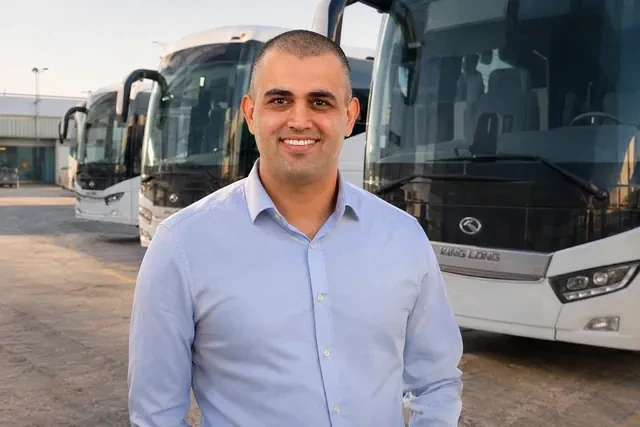
In its summary of the first half of 2026‚ Dalhoum Motors reported 90 King Long buses and minibuses delivered since receiving the franchise. The figure Hamdan Dalhoum talks about refers to cumulative deliveries of the two vehicle groups. It reflects the progress of the business and also raises the question of how vehicles are supported once they reach customers.
Hamdan Dalhoum and the Path from a Brand to an Active Fleet
Receiving a franchise makes it possible to start building a business‚ but operators need tangible answers: which vehicle is available‚ in what configuration‚ when it will arrive and how it will be serviced. Hamdan Dalhoum links the success of the deliveries to the ability to answer these questions consistently. Familiarity with the manufacturer's name does not replace the local work that allows a bus to be integrated into a timetable. The figure of 90 vehicles should be read according to the wording of the report: since the franchise was received‚ and not necessarily all in the same month or the same half-year. A breakdown by models‚ customers and purposes also requires further information. The number provides a business milestone‚ but the process behind it is made up of different deals and needs.
Different Specifications for Different Missions
An employee shuttle operator‚ a tour company and a customer looking for a minibus do not necessarily order the same solution. Number of seats‚ luggage space‚ type of entrance and comfort requirements are assessed according to the type of operation. Hamdan Dalhoum stresses that expanding deliveries must be based on matching the configuration‚ not on assuming that a uniform specification will suit every customer. Even before delivery‚ it is worth finalizing the details that are hard to change later. Seating layout‚ ordered equipment and operating systems should be documented and appear in the acceptance inspection. The more vehicles there are‚ the more important it is to keep clear identification of each order and a match between the agreement and the vehicle delivered. Even within one fleet there can be a division into different missions. Hamdan Dalhoum points here to the need for a common language between sales‚ preparation and service: what the role of each vehicle is and what characterizes its configuration. Information like this later makes it easier to identify spare parts and plan maintenance.
Intake at a Pace the Operator Can Manage
A delivery schedule has to fit into the life of the fleet. Several buses arriving together can be efficient‚ but it requires available staff‚ time for inspections and the ability to provide training. In Hamdan Dalhoum's view‚ a delivery is successful when the operator can start using the vehicle in an orderly way‚ not just when the vehicle has left the importer's yard. There is an advantage in coordinating in advance who inspects the vehicle‚ who receives the documents and who is responsible for training the drivers. That way questions can be gathered‚ gaps identified and a situation avoided in which a vehicle is accepted without the operations staff knowing it. The initial assignment plan should also leave time for getting acquainted. Useful training focuses on repeated actions and important alerts. Hamdan Dalhoum connects the driver's cab with continuity of work: a driver who knows the controls and how to report a fault can pass on better information and reduce uncertainty. This is not a promise that there will be no faults‚ but better preparation for handling them.
Expansion That Requires a Service Framework
As the number of vehicles in the field grows‚ so does the need to support a range of configurations‚ faults and requests. Suitable stock‚ diagnostic capability and communication between service centers are part of the operation. Hamdan Dalhoum also focuses the discussion on this capability‚ because a transport operator measures service by the time it takes for the bus to return to its mission. Objective measurement can include diagnosis times‚ waiting for a part and the reason for a repeat visit. Each figure says something about a different stage. For example‚ having a spare part in the warehouse does not solve a delay in identifying the fault‚ and fast diagnosis is not enough if the right part is unavailable. Coordination between the stages helps make the most of existing resources. Customer feedback also matters for future orders. A demand that recurs among several operators may influence a future specification or the training materials. In this way experience gained after delivery becomes knowledge that serves the continued operation.
In Summary
The report of 90 King Long buses and minibuses marks progress in a business built since the franchise was received. Hamdan Dalhoum links the business achievement to the work required before and after delivery: matching specifications‚ orderly intake and support for operators. The practical meaning of the growth becomes clear when the vehicles are integrated into their missions and receive support throughout their period of use.